

Not all towing methods are equal. When it comes to protecting your vehicle during transport — especially over long distances — flatbed towing is the gold standard. In Atlanta, GA, Long Distance Tows operates a fleet of flatbed carriers designed to move vehicles safely, whether you're going 10 miles down the road or 1,000 miles across the country.
Why flatbed matters: On a flatbed, all four wheels are completely off the ground during transport. This eliminates drivetrain stress, prevents odometer accumulation, and protects your vehicle from road debris and curb impacts. For AWD vehicles, luxury cars, and all long-distance hauls, flatbed is not optional — it's the only responsible choice.
WHAT IS FLATBED TOWING?
Flatbed towing uses a carrier truck with a flat, level deck that can be hydraulically tilted or lowered to the ground for loading. Your vehicle drives or is winched onto the deck, secured with ratchet straps and wheel nets, and transported with all four wheels elevated off the road surface for the entire journey.
This is in contrast to wheel-lift towing, where only the front or rear axle is lifted, and the other two wheels remain on the ground — rolling for the entire duration of the tow. Wheel-lift is acceptable for very short, emergency local tows on standard vehicles, but it is inappropriate for AWD cars, long distances, or any vehicle with drivetrain sensitivities.
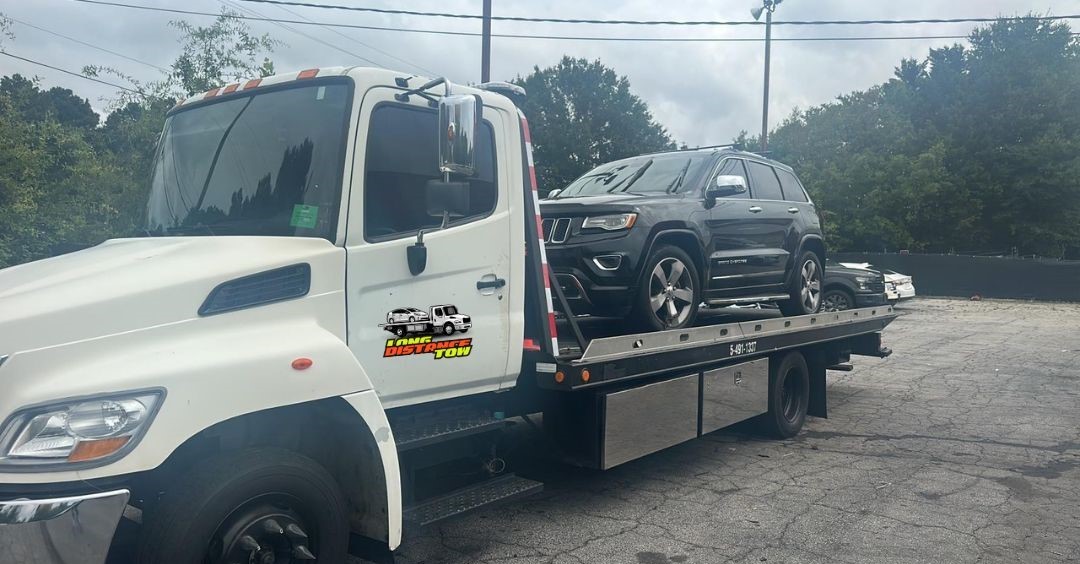
WHY FLATBED IS THE SAFEST OPTION
No Drivetrain Damage
When a vehicle is towed with the driven wheels on the ground, those wheels turn — and so does the drivetrain connected to them. For AWD and 4WD vehicles, this means the transfer case and differentials are spinning without being lubricated by the engine's oil pump. Even a few miles of this can cause permanent damage costing thousands to repair.
On a flatbed, nothing moves. All four wheels are stationary on the deck for the entire trip. Zero drivetrain stress, zero risk of this type of damage.
No Odometer Accumulation
When wheels roll, the odometer turns — even during a tow. On a wheel-lift tow, your vehicle accumulates actual mileage during transport. On a flatbed, your odometer reads exactly the same at the destination as it did at pickup. For leased vehicles, new cars, or any vehicle where exact mileage matters, this is significant.
Protection From Road Debris
A vehicle being towed on two wheels is still at ground level at the rear. Road debris, water, mud, and highway grime hit the undercarriage and bodywork just as they would if you were driving normally. On a flatbed, your vehicle is elevated off the road — cleaner arrival, no road rash risk.
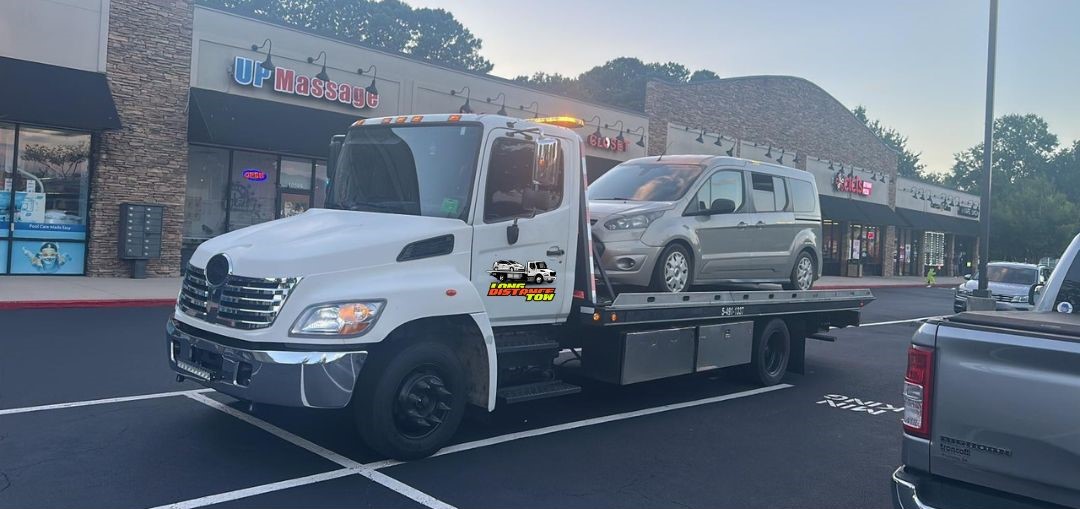
FLATBED TOWING IN ATLANTA — WHEN YOU NEED IT
In Atlanta's dense highway environment — I-285, I-85, I-75, I-20 — vehicles break down every day. The question isn't whether you'll ever need a tow; it's whether you'll have the right company's number when you do. These are the situations where flatbed towing in Atlanta is the right call:
- AWD or 4WD vehicles — Subaru, Audi Quattro, BMW xDrive, Jeep 4x4, any AWD crossover
- Luxury and exotic vehicles — Low ground clearance cars that can't use wheel-lift without damage
- Long distance transport — Anything beyond local emergency towing
- Non-running or severely damaged vehicles — Accident recovery where the vehicle cannot be moved under its own power
- New vehicles and leased cars — Protecting mileage and preventing any wear during transport
- Motorcycles — Specialized flatbed or motorcycle carrier for two-wheeled vehicles
NEED FLATBED TOWING IN ATLANTA?
We dispatch flatbed carriers 24/7 across Atlanta metro and statewide Georgia. Locked-in pricing, professional equipment, zero hidden fees.
📞 (770) 802-0831 — Call Now ✉ Free EstimateHOW LONG DISTANCE TOWS HANDLES FLATBED JOBS
Every long distance job we take uses flatbed transport — no exceptions. For local emergency towing, we also default to flatbed whenever the vehicle type requires it. When you call (770) 802-0831, our dispatcher asks about your vehicle to ensure the right equipment is sent the first time.
Our flatbed loading process: the driver positions the truck, lowers the deck hydraulically, and drives or winches the vehicle onto the platform. Once loaded, four-corner tie-downs are applied — ratchet straps on the frame or designated tie-down points, plus wheel nets over the tires. Nothing shifts in transit.
TIPS FOR FLATBED TOWING CUSTOMERS
- Tell the dispatcher your vehicle is AWD or 4WD when you call — this ensures a flatbed is dispatched automatically.
- For low clearance vehicles, mention your ground clearance. We use loading ramps and can adjust the loading angle to avoid scraping.
- Remove loose items from the roof, truck bed, or exterior of the vehicle before loading.
- Leave the vehicle in neutral (or park for automatics) and unlock the steering wheel before the driver loads it.
- Take photos before and after loading — document the condition of your vehicle for your own records.
FREQUENTLY ASKED QUESTIONS
- Is flatbed towing more expensive than wheel-lift?
- Flatbed towing typically costs slightly more than wheel-lift for short local tows, because the equipment is more specialized. However, the cost difference is minimal, and the protection it provides for your vehicle far outweighs any price premium — especially for AWD vehicles where improper towing can cause thousands in drivetrain damage.
- Can any vehicle be loaded on a flatbed?
- Yes — with the right equipment. Very low clearance vehicles may require special loading ramps or a tilt-deck approach. Motorcycles require a motorcycle chock and specialized tie-downs. We have the equipment and experience to load virtually any vehicle safely.
- What is the weight limit of your flatbed trucks?
- Our standard flatbed carriers handle vehicles up to approximately 10,000 lbs. For heavier vehicles (box trucks, RVs, large commercial vehicles), we use medium duty equipment rated for higher payloads. Always tell us your vehicle's approximate weight when calling.
- Do you offer enclosed flatbed transport for valuable vehicles?
- Contact us to discuss enclosed transport options for high-value, classic, or exotic vehicles. Enclosed carriers provide complete weather protection and additional security during transport.